
How the Kingdom Is Building a SAR 13 billion Digital Finance Ecosystem by 2030
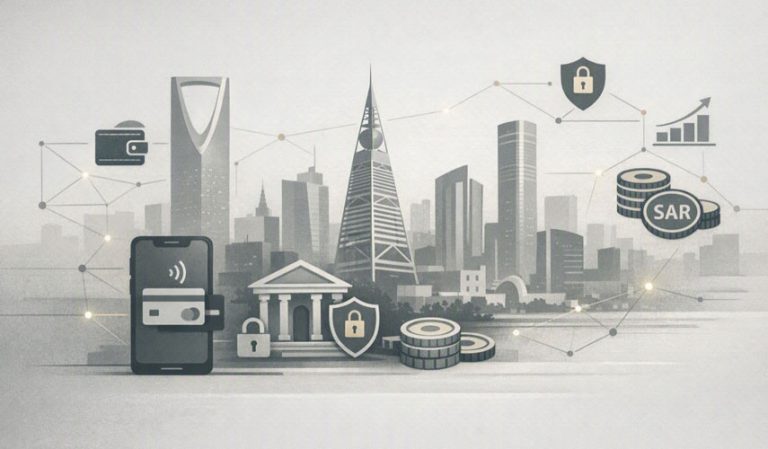
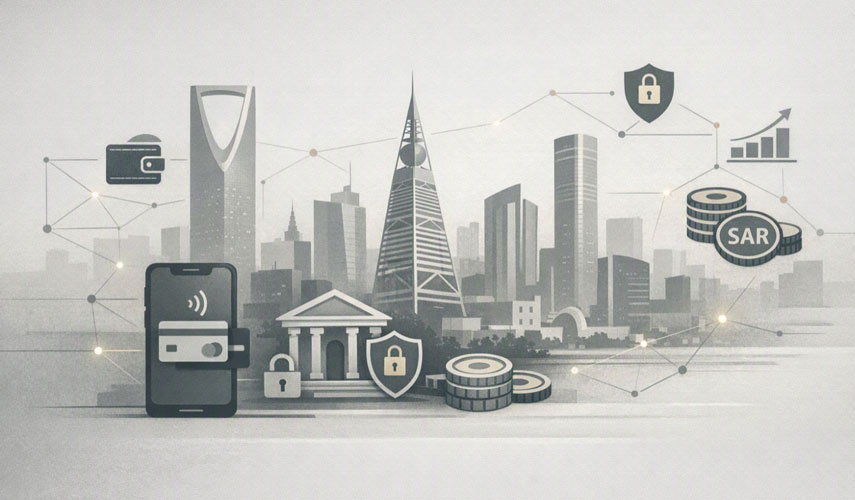
Three years ago, the majority of retail transactions in Saudi Arabia were still conducted in cash. Today, over 75% of financial transactions in Saudi Arabia are digital, supported by the government’s explicit push for a cashless economy. Mobile wallets, tap-to-pay, buy-now-pay-later services, and AI-powered financial platforms are not differentiators in the Saudi market, they are baseline expectations.
The growth is measurable. Saudi Arabia’s fintech strategy targets 525 fintech companies, 18,000 new jobs, and SAR 13 billion in GDP contribution by 2030. BNPL customers grew from 76,000 in 2020 to over 10 million by 2024. For professionals, investors, and technology leaders across the GCC, this ecosystem is a strategic priority.
BNPL customer growth — Saudi Arabia 76K → 12M+ From 76,000 users in 2020 to over 12 million by 2024 — the fastest BNPL expansion in the Middle East (Saudi Market Research Consulting) [4] |
The State of Saudi Fintech in 2026; Key Metrics
Metric | Figure | Context |
Digital transactions share | 75%+ | Up from below 50% in 2020 |
Active fintech companies | 300+ (end-2025) | Up from 10 companies in 2018 |
Target companies by 2030 | 525 | SAMA FSDP target |
Target fintech jobs by 2030 | 18,000 | SAMA FSDP projection |
BNPL market (KSA) 2025 | USD 4.96 billion | Growing at 22.4% CAGR to 2033 |
Cumulative VC target by 2030 – Including broader digital economy & private investment | USD 12+ billion | Saudi Fintech Strategy |
The Anchors: Key Players Defining the Saudi Fintech Landscape
- STC Pay (STC Bank): Saudi Arabia’s first fintech unicorn under Saudi Telecom Company, offering mobile wallet, remittance, and business payment services. STC Pay has since received SAMA approval to transition to STC Bank, the most advanced digital payment platform evolution in the Kingdom.
- Tamara: Saudi Arabia’s first homegrown fintech unicorn, reaching a USD 1 billionvaluation after a USD 340 million Series C round led by SNB Capital and PIF’s Sanabil Investments. Founded by Saudi co-founders in 2020, Tamara operates across Saudi Arabia, the UAE, and Kuwait with BNPL partnerships at IKEA, Jarir, and SHEIN.
- Tabby: GCC co-leader in BNPL alongside Tamara, having raised USD 600 million and expanding services across Saudi Arabia and the UAE. Tabby and Tamara together represent the shift in how Saudi consumers prefer to pay; interest-free, installment-based, Sharia-compliant.
- SAMA Regulatory Sandbox: The Saudi Central Bank’s Regulatory Sandboxhas enabled dozens of fintech startups to test and scale innovative products under supervised conditions, reducing time-to-market for compliant innovations.
Why BNPL Has Become Saudi Arabia’s Most Watched Fintech Segment
Three structural factors explain BNPL’s extraordinary growth in Saudi Arabia:
- Islamic finance alignment: BNPL’s core proposition, interest-free installments, aligns naturally with Saudi Arabia’s Islamic finance framework, making it culturally resonant in ways that traditional credit products are not.
- Youth-led mobile commerce: Saudi Arabia’s population is 60+% under 30and about 71% are under age 35 a cohort that treats BNPL checkout options as standard rather than novel.
- Retail integration: BNPL has been integrated into Saudi Arabia’s major online and physical retail environments. from Jarir Bookstore to SHEIN, making it as frictionless as any traditional payment method.
The Regulatory Architecture: What Businesses Must Navigate
Regulator | Full name | Primary role in fintech |
SAMA | Saudi Central Bank | Payment licensing, BNPL regulation, fintech sandbox |
FSDP | Financial Sector Development Program | 525-company target, VC growth, financial inclusion |
SDAIA | Data and AI Authority | PDPL data protection for fintech customer data |
NCA | National Cybersecurity Authority | ECC 2-2024 for platforms handling financial data |
CST | Communications, Space & Technology Commission | Digital infrastructure and app store compliance |
For fintech companies in Saudi Arabia, multi-framework compliance is the reality. SAMA licensing is the starting point. PDPL governs customer financial data handling. NCA ECC 2-2024 applies to any system processing financial data. Understanding this stack upfront is structurally cheaper than navigating it reactively.
Five Opportunity Areas for GCC Businesses
- B2B payments and supply chain finance: NEOM, the Red Sea Project, and Diriyah are generating multi-billion-dollar B2B transaction volumesthat modern embedded payment infrastructure is positioned to serve.
- Islamic fintech: Sharia-compliant digital investment, savings, and insurance products are structurally underservedrelative to the sophistication of Saudi consumers and the depth of the Islamic finance market.
- Open banking: SAMA’s Open Banking Framework, launched in 2022 and maturing through 2026–2027, will unlock API-driven financial product innovation for developers and service providers.
- AI-powered financial services: The convergence of HUMAIN’s AI infrastructure with banking, insurance, and investment platforms creates a product category Saudi Arabia does not yet fully have and is actively building.
- Remittance and cross-border payments: Saudi Arabia’s large expatriate workforce creates persistent, high-volume demandfor affordable, fast international transfer services.
- Regulatory entry point: SAMA Fintech Office
- Market data resource: Saudi Fintech — official industry body
Quick-start: Register your organization with the SAMA FinTech Office this week — even if you are not yet ready to apply for a sandbox license. Understanding the licensing pathway and staying informed on SAMA’s open banking announcements is the minimum baseline for any GCC business considering a Saudi fintech play in 2026.
The Vision 2030 Frame: Structural, Real, and Already Happening
Saudi Arabia’s fintech transformation moved from 10 licensed fintech companies in 2018 to 300+ by end-2025 and is targeting 525 by 2030. The SAR 13 billion GDP contribution target, 18,000 jobs, and USD 12+ billion in cumulative VC funding are measurable outcomes of a funded, structured, and regulation-supported national strategy.
For professionals and investors across the GCC, the question is not whether Saudi Arabia’s fintech sector will reach those numbers. The question is which organizations will be positioned within that ecosystem when it does.
References & Sources
All statistics, GCC-specific data, and organizational examples cited in this article are sourced from verified, publicly accessible reports, official announcements, and peer-reviewed industry research.